Burch (Part 4)

Al poked his head into the dining room, saw no one he knew, and after making sure the hall was clear, took the money out of his cigarette pack and put it into the pocket with the shower key. As he walked the hall past the sleeping areas, he removed his hat and the band of bills he kept there. Into the pocket they went. Standing against the door, looking into the main sleeping area, Al removed the folded bills from small pockets of his jeans, the ones where no one ever looked, no matter how many times he’d been rolled, and slipped them into the same pocket.

His other pockets were empty except for the change from his purchase. Finally, he made his way to the bathrooms. Al checked the toilet area first, and it appeared to be empty, so he hurried into the handicapped stall and sat on the toilet. Al crossed his right foot across his left knee and removed his shoe. He lifted the insole and removed the bills, which he stuffed into his pocket. Then he took off one sock, removed those bills, and pocketed them. Finally, he checked his other sock and the last bills. He did this for his left foot as well, hurrying in case someone came in. No one did.

He had 23 ones, 9 fives, 7 tens, 5 twenties, a fifty, and two quarters. Two hundred and eighty-eight dollars and fifty cents. Al was amazed. It was more than he thought. More than he’d ever had at one time. 

The idea made him sweat but also made him calm. The more he had, the more he was willing to lose. Right now, he was willing to lose about half, though only a hundred would be comfortable. None would be excellent.

Al listened again. Footsteps. He wished he had thought to drop his pants. The footsteps came closer, then passed by without slowing. Al grabbed his money, tossed the plastic bag with his purchases on the floor, then stood and dropped his pants. He picked up the plastic bag, maneuvering the jeans and socks to the top, then started to sort his money. The fifty, all the twenties, and tens went into a roll. He unfurled one pair of socks, put the roll inside the sock, and rolled the socks again lengthways. He refurled the first pair of socks into the second pair. Then he took one five and four ones and stuffed them into the right front pocket of the jeans he was wearing. He took another five and put it in the breast pocket of his shirt, folded neatly, behind the cigarette pack. The remaining fifty-nine dollars he put in the various pockets of his new jeans.

Al flushed the toilet and left the stall. 

The shower area was also empty. Al threw his plastic bag into the first stall. He stripped bottom to top, placing his shoes on the available bench, then his socks, jeans and underwear, three shirts, and hat.

Still, there was no one around. Al stepped into the shower and double-tied his plastic bag. He threaded one of the loops over the shower head as far back as it would go before turning on the water. The contents might get a little damp, but that was a small price to pay, and it was warm out. Al soaped and shampooed himself, reveling in hot water and clean skin, but keeping an ear out for someone entering the showers. No one did.

Al turned off the water and retrieved his bag. He toweled off and put on his new underwear, jeans, and shirt. He folded his old shirts and his old jeans and left them on the bench. Al tossed his hat in the bag with his other shirt. The old undershirt, socks, and underwear he threw away. Al put his money back where it belonged. He did so quickly and efficiently.

On his way out, he stopped by the dining room to see if there was any food. They hadn’t started lunch yet, but the ladies there liked him, so they gave him a peanut butter sandwich, an apple, and a milk carton. It was delicious.

“You look like a new man, sugar!” Debbie said, fanning herself theatrically.

“Feel like one too.”

“Now, don’t wait so long before you come back and see your girlfriend, you hear?”

“I won’t, Miss Debbie, I’ll see you very soon,” Al promised as he walked out the door. The cowbell jangled as he exited.

Al made it another two blocks before he changed his gait. He lifted his head and straightened his spine. The difference was subtle but the effect was undeniable. He no longer looked downtrodden. He looked like…well…like anybody. His steps were more sure and his bearing more erect. No one looking at him could have told you anything about him.

Al reached yet another door and set the bells jangling. Three faces looked up when he entered the barbershop.

“Hey man,” said the barber, “do for ya?”

“Can’t you tell?” said Al and gestured to his face. The three men laughed.

“Sit right here,” said the barber indicating the chair in front of him. “We’ll make you pretty in no time. I’m Mick, and this here’s Tito and Squash.” Al nodded to the men’s reflection in the mirror as he sat down.

“I’m Alex,” he said.
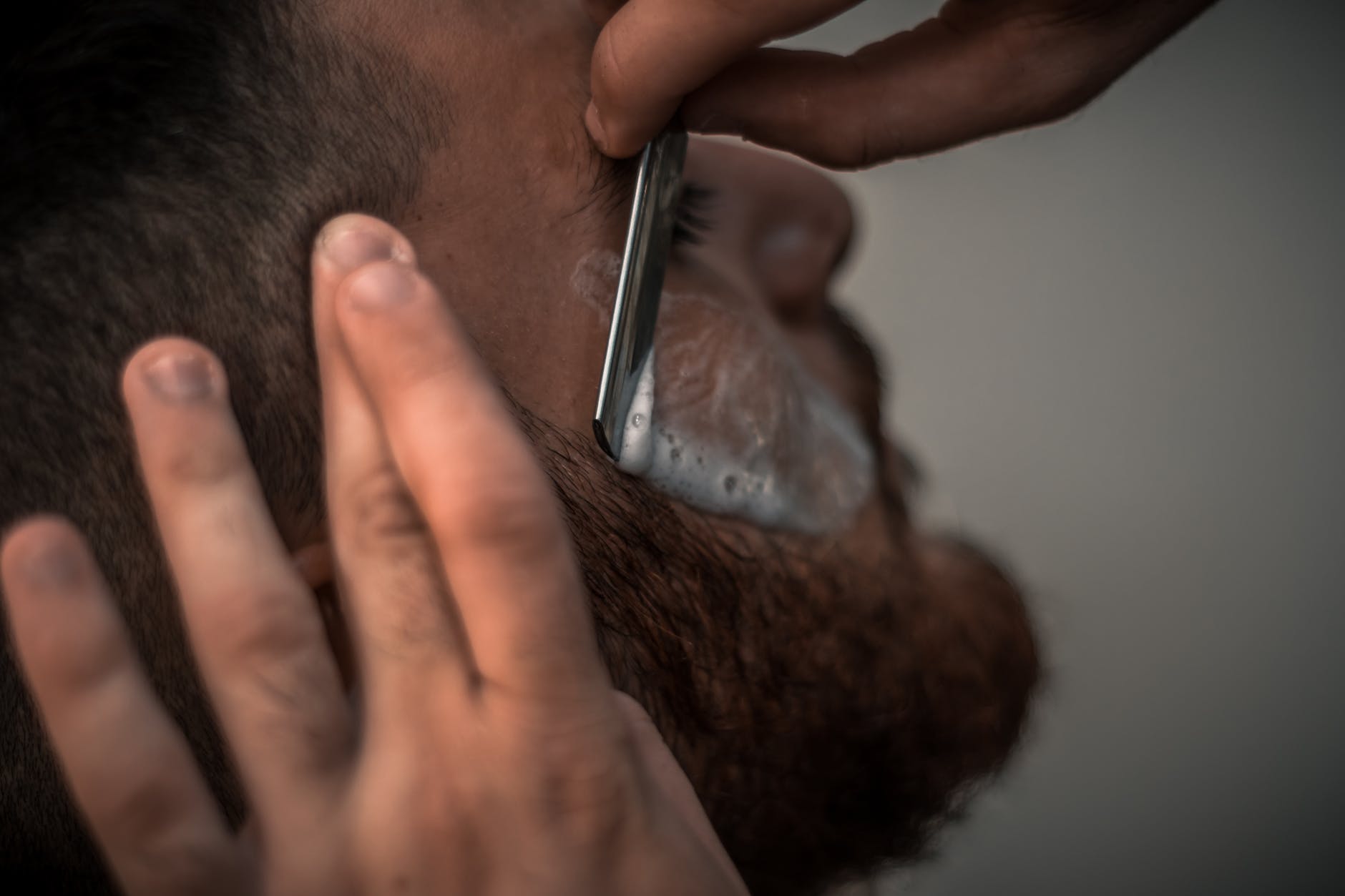
Photo by Nikolaos Dimou on Pexels.com

Burch (Part 3)

Just yesterday, a group of six or so tourists had filed out of the coffee shop chatting to each other about how good the espresso and cranberry scones were in this cute little shop. Someone suggested a group photo. A tall blond man with a Nikon looked around and spotted Al sitting by the shop.

“Hey man, um, d’you think you could, um, I mean, would’ja mind takin’ a picture of us?”

A shorter woman with excessively curly hair tugged at the blond man’s arm and said something, shooting suspicious looks at Al, who had to keep himself from smiling.

“What? It’s fine,” the blond man said to the curly woman before turning back to Al, “Would’ja mind? I’d be happy to pay ya.” 

Al just nodded–he spoke as little as possible–as he rose from the sidewalk. He took the Nikon from the blond man, a little surprised at how light it was, and studied it while the group arranged themselves for the photo.

“It’s the button up there on the top, on the right,”  the blond man said, already grinning. The curly lady watched Al intently. She looked wound up–ready to pounce–waiting, he guessed, to see if he’d run off with the camera. She couldn’t guess it was the last thing he wanted. He centered the group on the viewfinder screen and snapped a picture. They asked him to take one more. He did.

As the blond man took his camera back, he pressed a folded bill into Al’s fingers. Al mumbled his thanks, then glanced down at the bill. It was a crisp 20-dollar bill. He looked up quickly at the blond man, who was still grinning, sure the man had made a mistake.

“No, no,” the man started and clapped Al hard on the shoulder, “you get yourself somethin’ to eat, all right?” and he and his group walked away, looking for more of the “real” San Francisco. 

Al watched them for a few minutes–they had already forgotten about him, pointing and talking–before resuming his seat by the café. He looked at the 20 again, shook his head, and guided it to the secret pocket he had sewn to the inside of his shirt pocket, where the bill nestled against two other 20-dollar bills and a 50. 

Today Al found the 39th-street shelter looking sad and deserted from the outside. This was good news: no special breakfast or job fair going on this morning. He pushed open the glass door almost apologetically, hearing the clank of the cowbell attached to it. 

Debbie looked up. She was a round woman of indeterminate age and perpetually sunny disposition despite her surroundings. She was light-skinned—more cream than coffee—with dainty freckles from her cheekbones to her eyelids and hair that sprung from her head in tiny tight ringlets.  

She looked up from her crossword over her blue reading glasses as the bell rang, and her face exploded into a radiant smile.

“My main man Al! How you been, sugar? Haven’t seen you in a hot minute. Where you been hidin yaself? And when you gonna take me on that date?”

“Oh, you know,” Al replied, ducking and smiling, making tentative eye contact, then looking away, “been working so hard, can’t hardly seem to find the time for anything.”

“Well, you just let me know when you do find the time so I can tell that husband of mine I’m not cookin that night.”

“Will do, will do. Say, Miss Debbie, got a shower free?”

“Honey, you know I do for you.”

She handed him a key and offered to hold his bag—she knew how likely he was to get rolled back there too–but he explained it was his new clothes and thanked her but said he’d keep it. Al stuffed the shower key in his pocket and moved through the shelter, scoping the place and the people. 

Burch (Part 2)

Al was tired from the night before.

He’d been awakened and asked to move along three times before finding an unoccupied covered doorway just before sunrise. He’d headed to his café, as usual, beating the morning manager.

Al leaned against the warming stucco of the café, eyes closed to the sun on his face, and watched the kaleidoscope of purples, blues, greens, and oranges inside his eyelids. 

The cafe’s door had a bell, and Al heard it as someone entered or exited. He didn’t open his eyes, but he knew it was Sophie, his favorite barista, coming to wish him good morning.

He stood.

Sophie always brought him a steaming cup of coffee–likely the first of the day–and chatted to him for a few moments.

Al rarely talked back, though he did thank her for the coffee. He didn’t have much else to say or space to say it. The weather, sports, and city happenings were always on Sophie’s mind, and what was on her mind came out of her mouth.

Al nodded along. That’s how he knew today was the day. The impending visit from the far-away owner. 

Al waited until Sophie went back inside before dropping to a squat. He enjoyed his coffee– savored it, really–then waited another thirty to forty-five minutes to be sure. No one approached him or seemed to notice him at all. He was part of the background. Part of the city it would rather not see and often chose to ignore.

He slowly stood, shaking out his limbs. Al looked around, watching for watchers. After standing against the sun-warmed stucco for another twenty minutes or so (God, he loved this spot), Al shouldered off and started his slow, shuffling walk uphill. 

No one was around–a joke, really, since there was always someone around in this city–so he dug into his front shirt pocket with two fingers. There was a pack of cigarettes in there, but he was going for the roll of money safety-pinned inside.

Al pulled both from his pocket and stopped to light a cigarette while carefully thumbing loose a twenty and tucking it nimbly into the sleeve of his lighting hand. The rest of the money slid neatly into the cigarette pack with his lighter. 

Al didn’t really like to smoke–it attracted others–so he tossed the cigarette after a block.

From there, it was only another five blocks to the Salvation Army Store and a new set of threads. Al chose carefully, flipping through each shirt and pair of pants as though preparing for an important business meeting. 

In a way, he was. He needed to blend into two very different environments, so he must choose carefully. 

Al finally decided on a white-ish thermal shirt that looked a little chewed at the sleeves and collar but fit pretty well, dark wash jeans a half-size too big, and a fleece lumberjack shirt he would save for later. He kept his shoes and hat since he didn’t find better options, but he got two new pairs of socks and some underwear. After making his purchases–a grand total of $11.50–Al pointed himself in the direction of the nearest shelter.

It was a little after nine, he thought, plenty of time for most everyone to have gotten out of dodge for the day. There might be a few stragglers who wouldn’t blink at the chance to fleece him– might, in fact, be hanging around for just such an opportunity–but there was only so much he could do about that.

Al had more cash on him now than he usually did at this time of the month, and he didn’t mind parting with a little of it if necessary. 

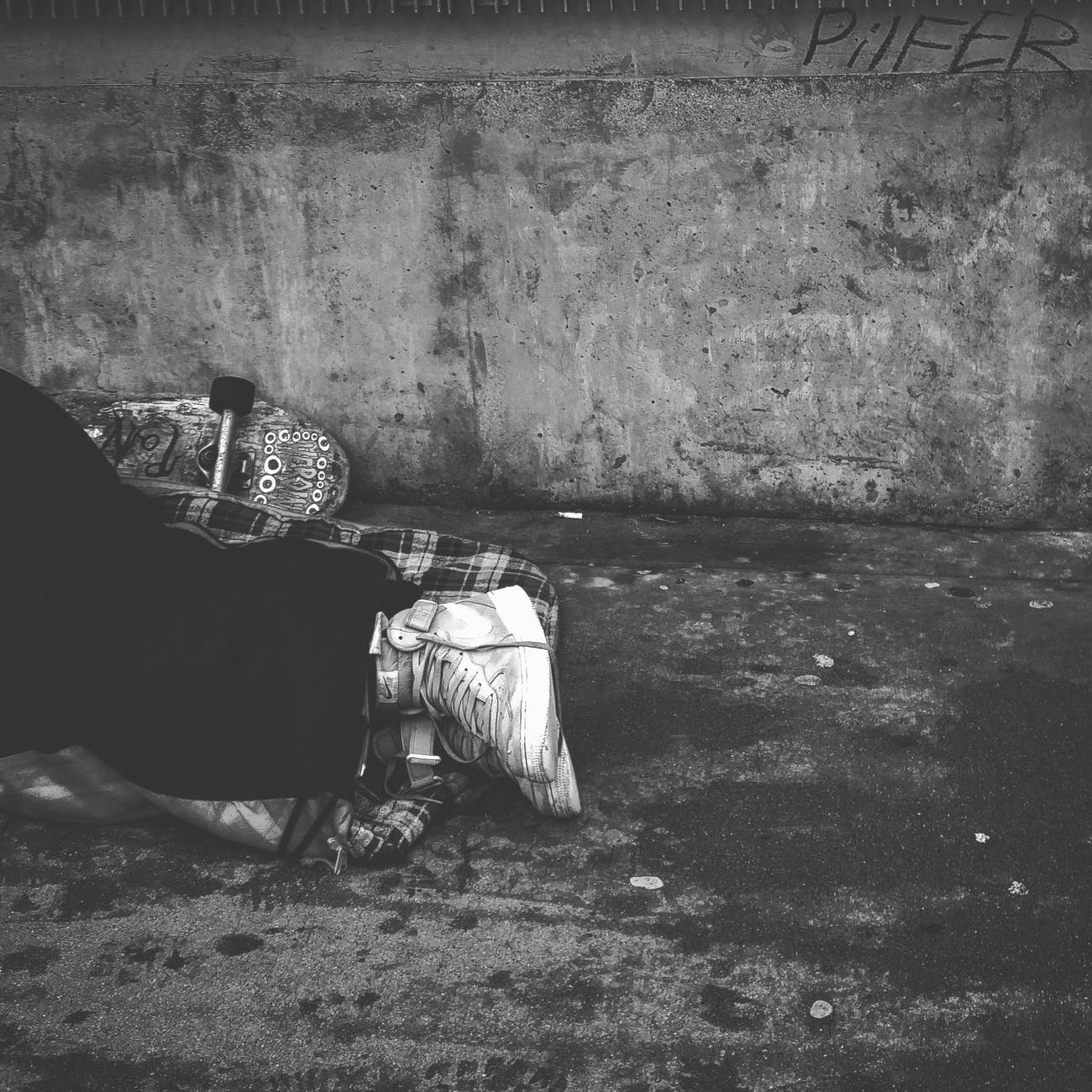
Photo by Taufiq Klinkenborg on Pexels.com

Burch (Part 1)

Today was the day.

Al opened his eyes. It was a beautiful morning. The sun was shining brightly and had already dispersed the early fog. It felt warm on his face. He blinked, adjusting his vision, but the scenery didn’t change. God he loved this spot. 

The warm stucco at his back pulled at his clothing and made a scratching sound as he shifted first one way then the other, bringing the rest of his body awake. Al bent one knee and then the other until he was sitting hunched, almost resting on his heels. He closed his eyes.

The coffee shop was a quaint place—not one of those chain deals—that looked like an old-fashioned, family-run business swallowed in the hustle-bustle of the big city. It was far enough away from the Embarcadero to retain its off-the-beaten-path charm but close enough to draw plenty of traffic. Tourists wandering around the side streets trying to get a view of the ‘real city’ were drawn by its large bay windows, green and white checkered tablecloths, and the old-timey penmanship that adorned the shop’s windows and cornices. A tourist trap in the perfect disguise of a non-tourist trap. That’s precisely why Al had chosen this spot.

Al had become a fixture at the cafe–its most regular regular–and he sometimes kidded to himself and others that the tourists came to see him as much as they came to see the coffee shop. They never asked him to move when they snapped pictures with their fancy cameras of all shapes and sizes. They thought they were capturing the “real” San Francisco, bums and all. The life of the city. He didn’t mind when they took his picture; it usually meant they would give him a buck or two if he asked.

​​This was one of the many ways Al earned a buck or two. He liked to vary his schedule. Some days he would bring pieces of colored sidewalk chalk and draw pictures on the cracked walkways around the café. Sometimes he brought a beat-up guitar he borrowed from one of his buddies and played tunes the whole day. Some days he just sat. 

Sometimes he asked for money. Sometimes, he just waited for it, amused to note that if he could make eye contact for more than ten seconds, hands dug in pockets, and the rattle of change or the crunch of a bill would make his day. 

Crying was a risky venture, but he pulled it out from time to time. It seemed to depend on the day whether a crying destitute man on the street would inspire pity, fear, or contempt. Of course, he got the range of these emotions every day, but it seemed to be more obvious on the crying days. Sometimes the hands dug deeper, and the rattle and crackle were heard more frequently. On other days he watched as wide-eyed mothers dragged their offspring to the opposite side of the street to avoid crossing his path. 

Some tourists and locals stared or pretended not to see him, and some snarled “get a job” or “quit your bitchin’” at him disdainfully as they passed. Some even faked a swift kick. 

The funny thing, at least to Al, was he really had nothing to cry about. It was simply a skill–like drawing or playing simple tunes on the guitar–he had cultivated over the years. He found it was easier than some of his other skills and, at least some days, far more lucrative. He would allow himself a small cackle when he counted the take on a particularly profitable crying day.

But today was not a crying day.

I am.

I am.
My self
Is enough
For Me.

Photo by Ithalu Dominguez on Pexels.com

Do this.
Be that.
I am.
Only aware
How
To be
Me.

This one is a little late, but grace is a thing around here. It’s actually the perfect opportunity to introduce what happens next.

April showers bring May flowers, right? I’ve made this joke before. Well, this year, consider my April poetry as the seeds showered, sprouting into what I hope will be beautiful May blooms.

In other words, I’m going to keep writing to You.

Since I started with poetry in April, I’m switching to prose for May.

You can comment below and tell me what you’d like for June. I have a few ideas, but I always welcome your input.

xxxlinsey

Cloudy Clarity

He said:

Pillar we move.

Cloud we stay.

I said:

“What about the sunny days?”

He said, laughing, ever patient:

“Very well.

Pillar we move. 

Cloud we stay.

Sunshine we enjoy.”

I said:

“Ok. I can handle that.”

He said:

“Wait. 

That still means

Don’t move.”

Photo by eberhard grossgasteiger on Pexels.com

It’s all too much

It’s all too much

To lose and gain

In the same space. 

To feel so much

Love and loss.

Open hearts hurt.

Closed hearts rot. 

Pain is useful

To let us know 

We are living. 

Photo by RODNAE Productions on Pexels.com

You Are Not Alone.

In a conversation with writer friends, I got an insight into how I and my writing offer hope to others.

My gift, if you will, my strength, certainly, is being able to sit in the dark with others. I have not had a bad life, but bad things have happened. I am not a stranger to pain, but it has not consumed me. I have survived, and I am willing to reach my arm back into the pit.

If that’s where you’re sitting, you’re not alone.

To celebrate national poetry month, I wanted to play with that form a bit because it’s something I rarely do. It’s outside of my comfort zone to share my faltering attempts with the world, but sometimes that’s just what we need.

Writing poetry for me is reaching for something I cannot grasp. If you’re feeling the same way, I hope this helps:

If
I can
give you one
thing, it is this:
You Are Not Alone.
I am here
for you
Always.

Photo by Lara Jameson on Pexels.com

Your darkness
does not
scare me.
Follow me
to the
Light.

ALL-DAY WRITING STREAM!

You read that write…I mean right.

I’m just crazy enough to pull off an all-day writing stream, this Friday, April 1st, from 10am to 10pm CST. on YouTube

HERE is the link.

Photo by Startup Stock Photos on Pexels.com

It’s the start of CAMP NANOWRIMO, which, if you don’t know by now, is an international writing competition. For this iteration of NaNoWriMo, you can set your own word count goals or work on other projects such as plotting or editing.

Photo by Kaboompics .com on Pexels.com

I just created my project (my username is linseyte if you want to be my friend!), and I’m ready to start writing. I will start Friday at 10AM and get as much done toward my goal as possible.

I would love for you to join us as we celebrate the start of April. See you there!

xxxlinsey

WorldWideWriteathon (WWW) THIS WEEKEND!

It’s that time again!

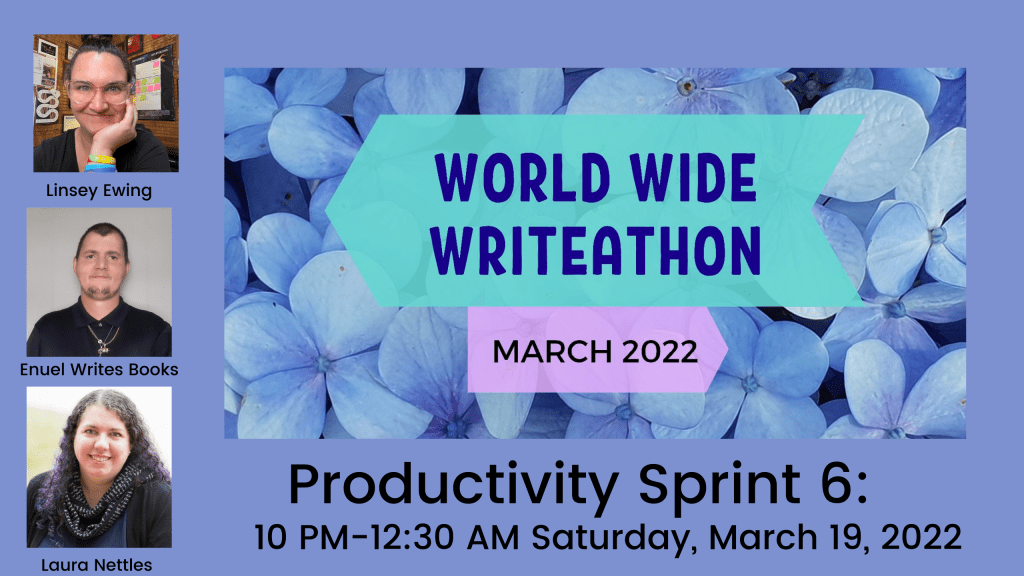
This weekend I have the privilege of hosting one of the productivity sprints of the World Wide Writeathon.

It’s a great time to prep your CAMP NANOWRIMO project, which is what I’ll be doing, or start that shiny new idea you’ve been pondering. This 36-hour writeathon will banish your writing excuses. It’s all on YouTube so it’s easy to access, and there will be participants from all over the world.

Make new friends and get your writing projects done.

Join me Saturday night at 10PM Eastern (9PM central) to 12:30 AM Sunday as we get our writing projects on. I have two wonderful co-hosts that will be joining me, so be sure to give them some love too.

Wondering about the links? Here they are. Can’t wait to see you there!

March 2022 Playlists:
Productivity Streams — https://tinyurl.com/March2022Productivity
Social Streams — https://tinyurl.com/March2022Social


My Stream: https://www.youtube.com/watch?v=H0Cb5jenix8

xxxlinsey

Blog at WordPress.com.

Up ↑